Character turnaround sheet generator
Use the character turnaround sheet generator to turn a full-body drawing into a row of front, three-quarter, side and back views, then check which details the model had to infer from the reference.
Last updatedCharacter art to a four-view turnaround sheet
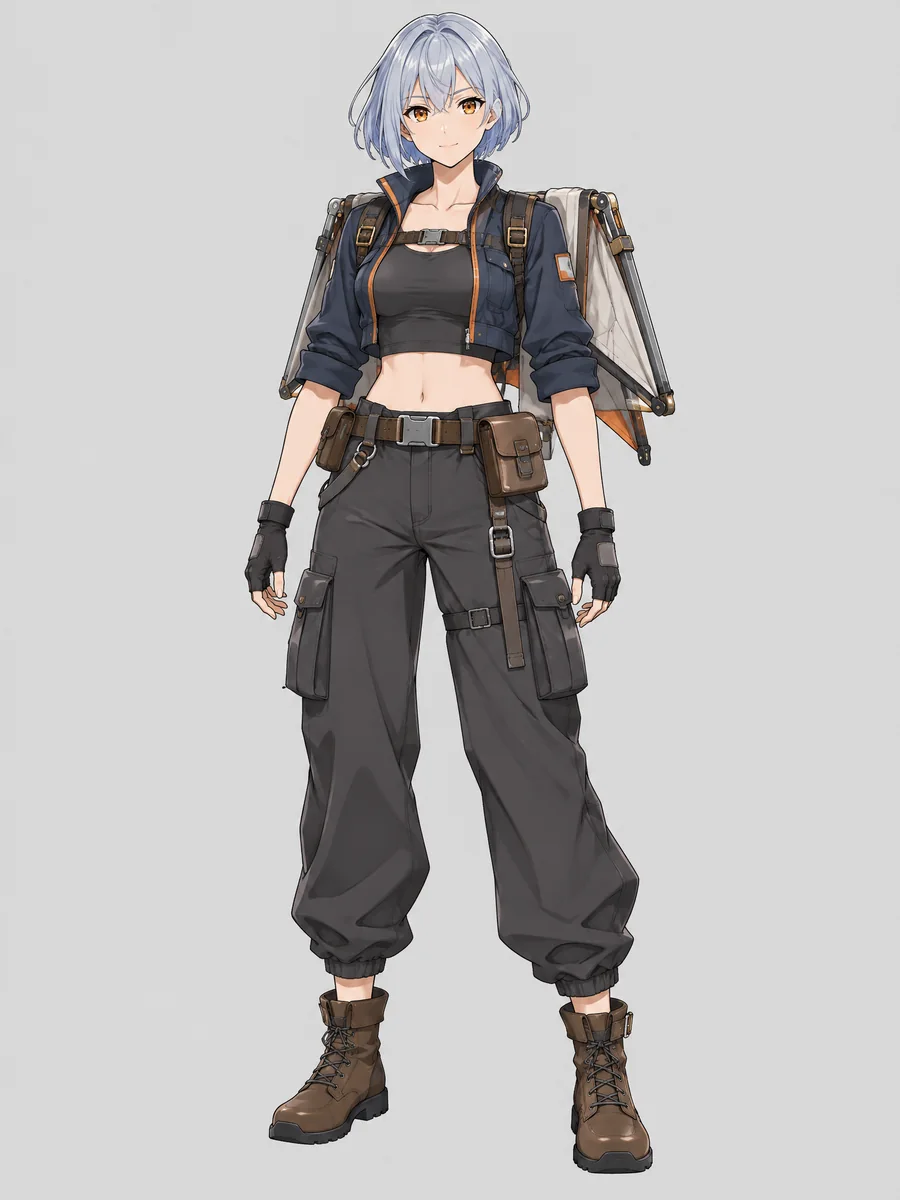
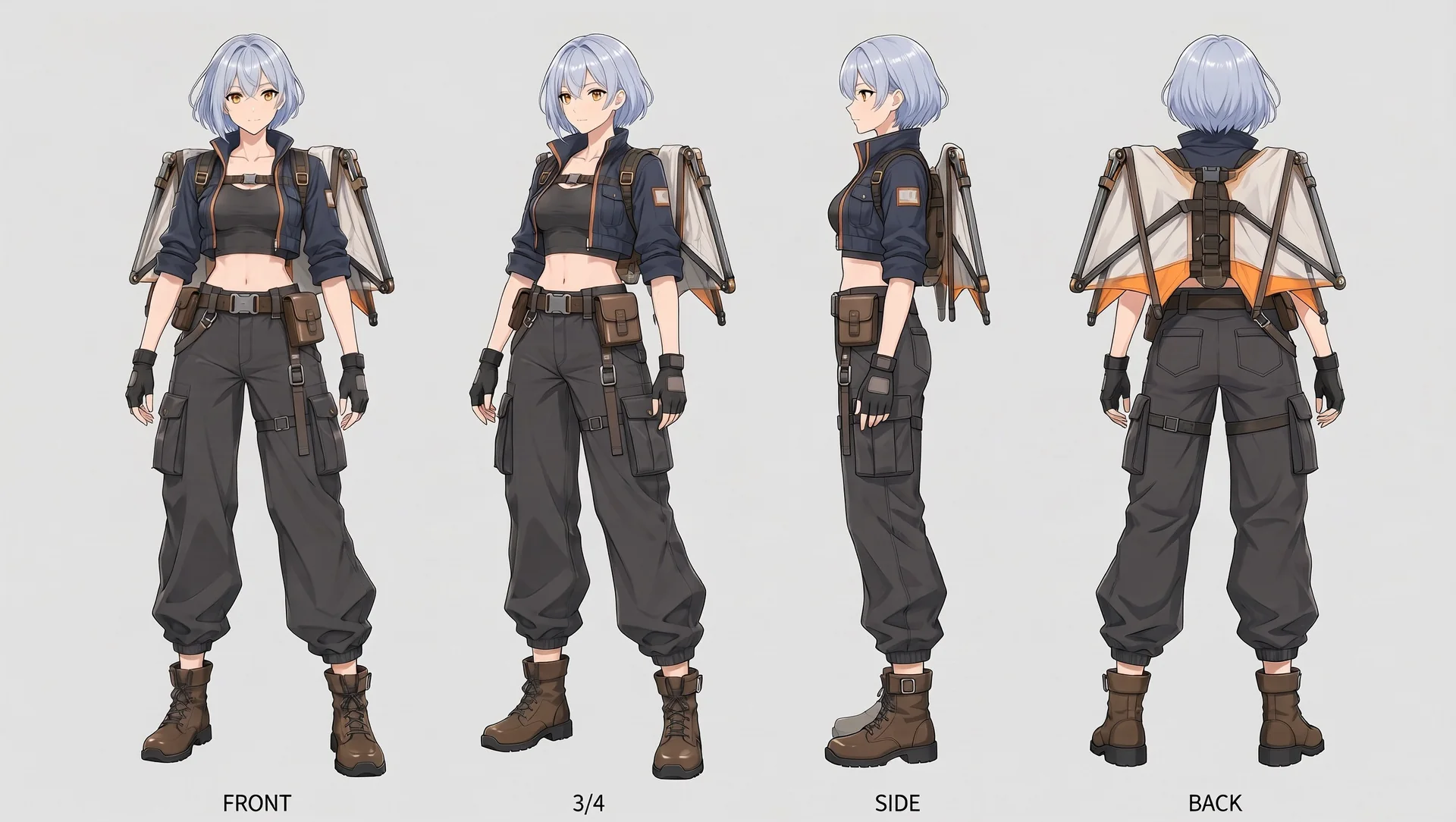
One front view became front, 3/4, side and back views at the same scale. Hair, outfit, pouches and glider pack stay consistent; the back of the glider shows orange panels the front view did not.
These inputs were made with GPT Image as source material. The result was produced by one MiniMax H3 Image edit with them, in this order.
2K · 16:9 · H3Img credits for these settings 1
Original prompt (English)
Create a character turnaround model sheet of the exact character in the supplied image: front, three-quarter, side and back views standing in a row on a plain light gray background, all at the same height and scale. Keep the outfit, colors, hairstyle, eyes, belt pouches and glider pack consistent in every view. Clean cel-shaded anime style matching the reference. Small labels under each figure: FRONT, 3/4, SIDE, BACK. No other text.Start with the design decisions already made
An illustrator preparing a handoff needs another artist to recognize the same character when she turns. The sky courier reference shows a silver-blue bob, navy jacket, belt pouches and folded glider pack. Check how much each feature actually reveals in the front drawing. A pouch next to the hip has a visible height and color, while a surface hidden behind the shoulders has no visible pattern. List those in separate notes before you ask for the other views. It will make the review conversation much more specific.
Read the four poses on a common baseline
The original direction calls for an evenly scaled row on plain gray and four labels below it. Start at the feet and compare figure height. Then follow one item across the row: find the belt in front, note its position in the three-quarter view, and trace where the attachments appear in profile and from behind. Our result keeps the outfit, pouches and glider recognizable, yet the back includes orange panels absent from the front reference. Decide with the designer whether those panels belong on future drawings.
Use the comparison studies to brief the next artist
The glass-flower illustration offers a useful contrast in what a prompt can establish. Its wording puts a glowing flower near the character’s chest and gives its gold center the job of lighting the face. That image describes atmosphere and a crop; it gives no view of the coat from behind. The tea-tin series offers a different comparison: the same gold mountain drawing and wordmark travel across three colors. Use that approach when you inspect a character emblem. Compare its outline independently of the surrounding colors and shadows.
Anime key visual with a glass flower
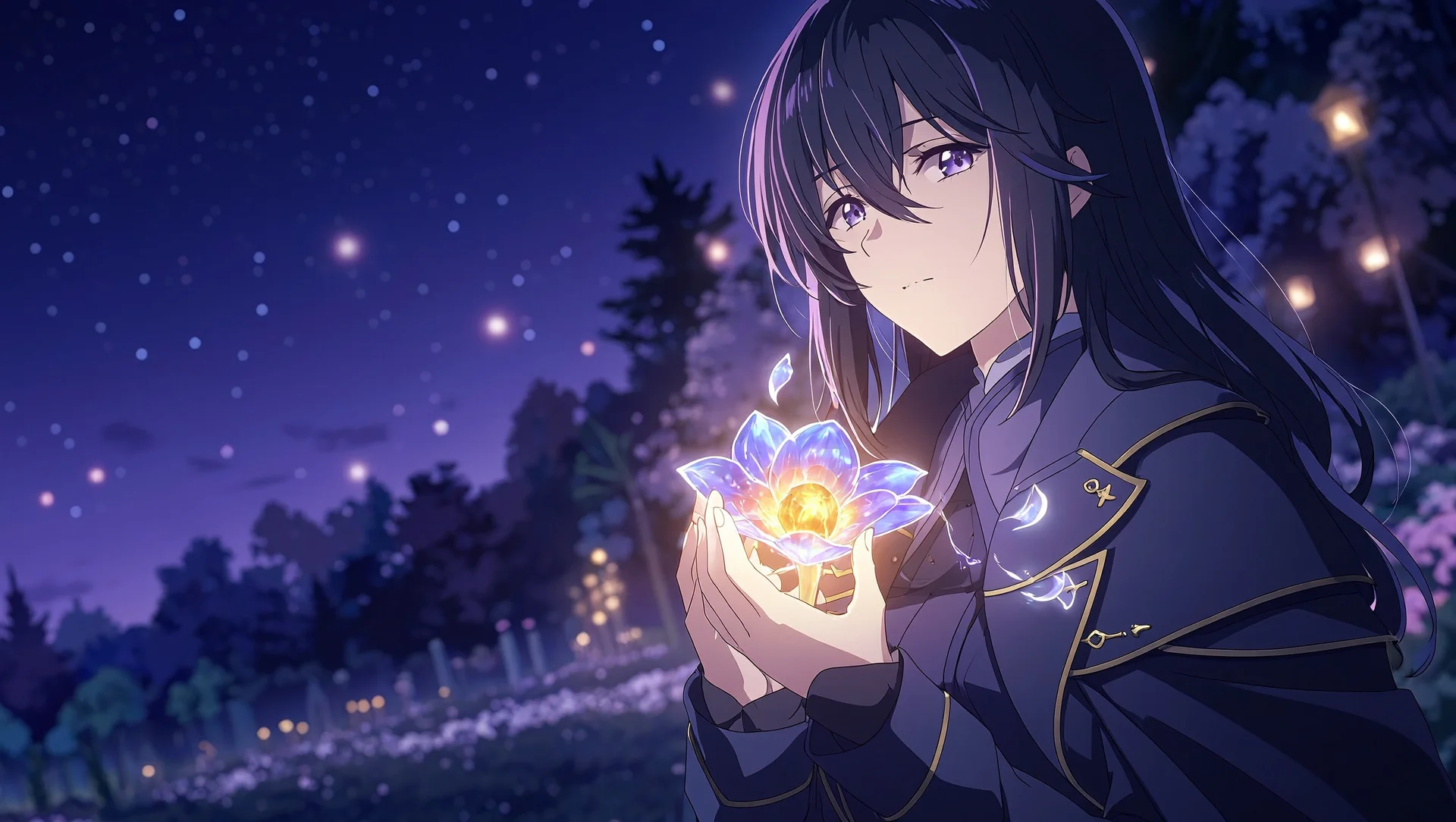
A text-to-image anime key visual: a woman in a navy coat holds a luminous blue-violet glass flower whose golden heart lights her face in a starry night garden.
2K · 16:9 · H3Img credits for these settings 1
Original prompt (English)
Premium original anime feature-film key visual, widescreen, highly detailed. Waist-up close composition of a young adult woman with long dark hair and calm violet eyes, in a dark navy high-collar coat, holding a single luminous glass flower near her chest. The flower has translucent blue-violet petals with glowing edges and a warm molten-gold heart that lights her face and fingers from below. She is on the right half of the frame, face around 40 percent from the top, soft violet rim light on her hair, fine glowing glass petals drifting past. Background: deep indigo night garden with bokeh lights and fine stars, painterly depth, cinematic shallow depth of field, crisp refined line art, rich shading, high contrast between warm flower light and cool night. Calm dark space on the left third. No text, no letters, no logo, no watermark.One package design extended to a three-color line
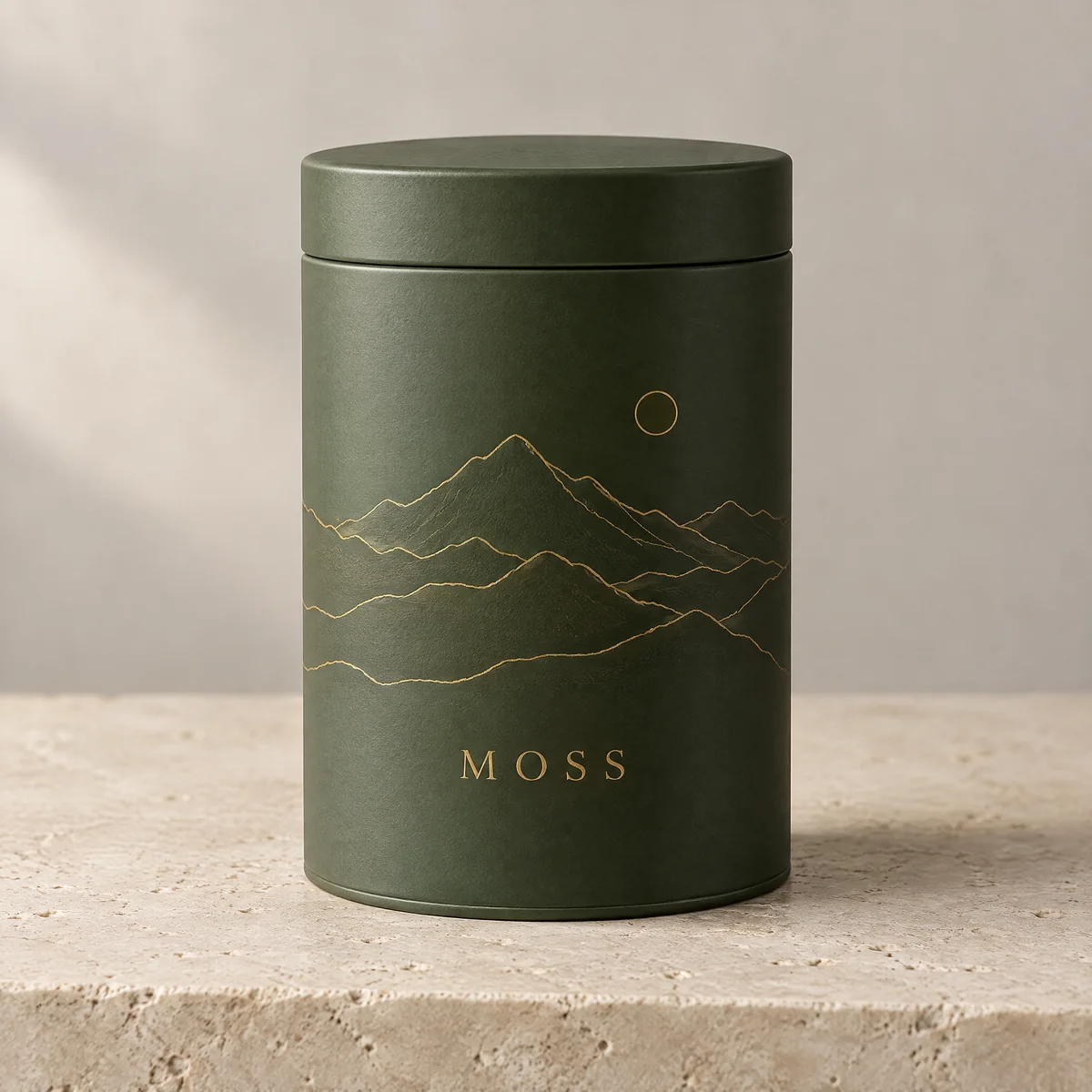
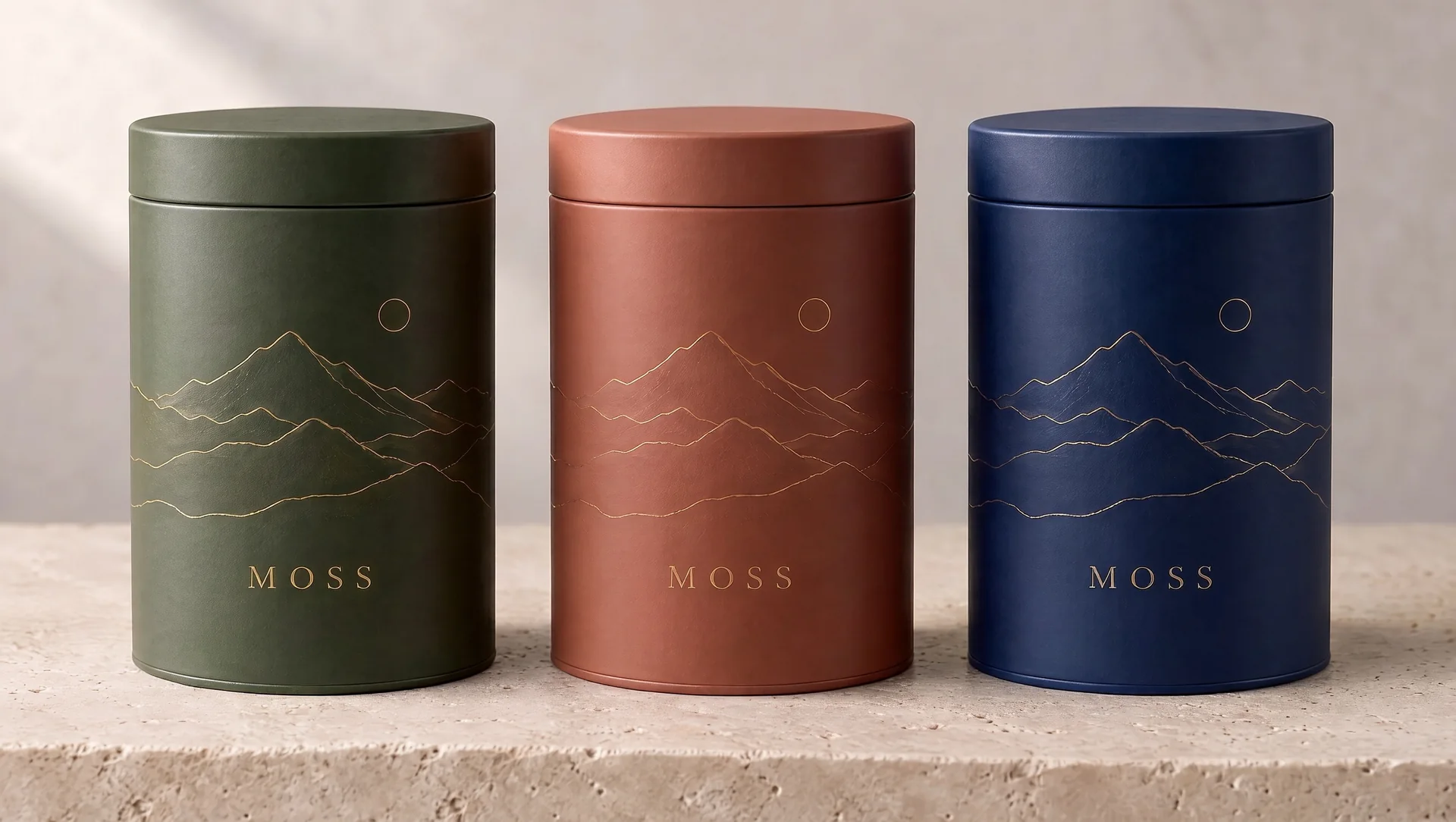
From one tin to a product line: shape, gold mountain drawing and the MOSS wordmark stay identical across green, terracotta and navy.
These inputs were made with GPT Image as source material. The result was produced by one MiniMax H3 Image edit with them, in this order.
2K · 16:9 · H3Img credits for these settings 1
Original prompt (English)
Use the supplied tea tin as the design master and create a product line photo: three tins of the same size and shape, each with the same gold mountain illustration and the same gold serif word MOSS, in three colors: the original deep moss green, a muted terracotta, and a deep navy. Arrange them side by side on a pale limestone shelf, soft light from the left, same warm-gray background. Keep the brand identical across all three. No other text or objects.Prompt to adapt
Create a turnaround sheet of the character in this reference. Place FRONT, 3/4, SIDE and BACK views in that order on one light gray canvas. Use the same standing pose and height. Keep [hair silhouette], [clothing colors], [belt attachments] and [pack outline]. Show [approved rear detail] on the back. Label each figure below. Add no other text.
Frequently asked questions
Is the back view an accurate reconstruction?
A front drawing leaves some surfaces unseen. In this run the orange panels are a new proposal, not evidence of the original design. Ask the artist for a rear reference or mark the panels for approval before handing off the sheet.
Can I use the result as a 3D asset?
The download is one flat image showing all the views. A modeler can use it as drawing reference after checking proportions and hidden surfaces. Geometry, rigging and an animated turntable would need separate work.